Learn about the careful ingredient selection in gimme seaweed products, which are Non-GMO Project Verified and naturally gluten-free.
While some products may contain soy or sesame, they are manufactured in facilities free from common allergens like tree nuts and dairy, ensuring a safe and tasty experience for most dietary needs.
Are your products allergen free?
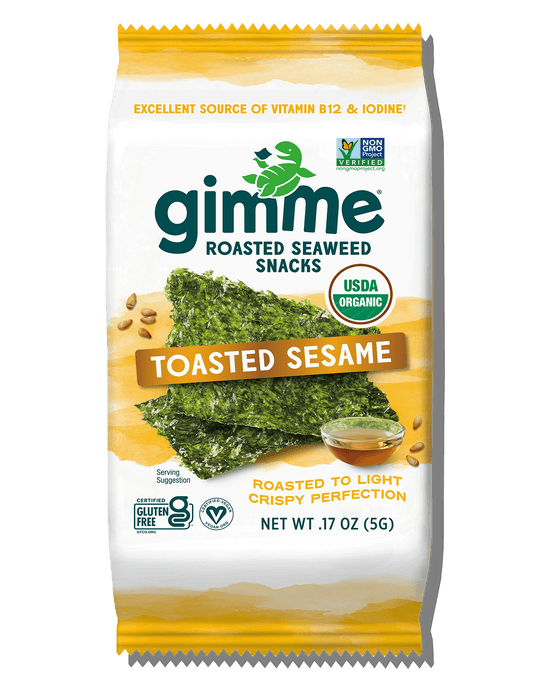
No, some of our products may contain soy and/or sesame. Please check the product's ingredient and allergen statements, which can be found on the package as well as our website.
Are your products manufactured in a facility free from tree nuts, peanuts, milk, and/or eggs?
Our products are manufactured in facilities that do not handle tree nuts, peanuts, milk and/or eggs.
Please note: some of the seasonings and oils we purchase are manufactured in facilities that may handle tree nuts, peanuts, milk and/or eggs. All food manufacturing companies are required to follow an Allergen Control Protocol to reduce the risk of cross-contact.
Are your products Non-GMO Project Verified?
Yes! All Gimme Seaweed products are Non-GMO Project Verified. Learn more about the verification process at nongmoproject.org
Are your products gluten-free?
Yes! All Gimme Seaweed products are naturally gluten-free and certified by the Gluten-Free Certification Organization (GFCO).
Do your products contain seed oils?
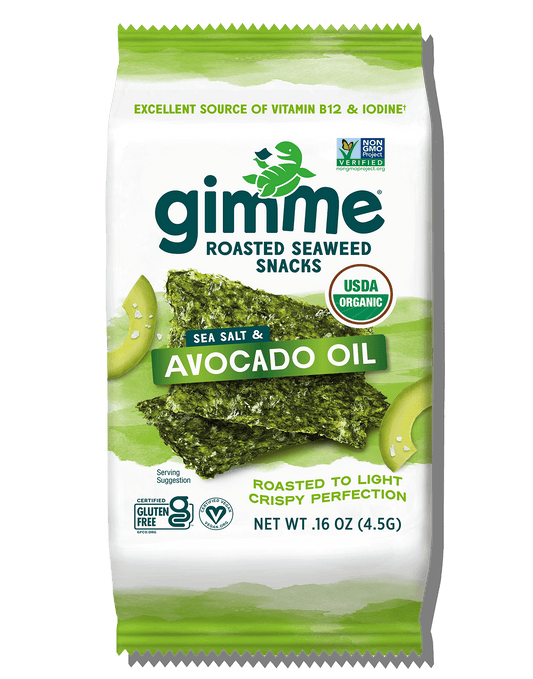
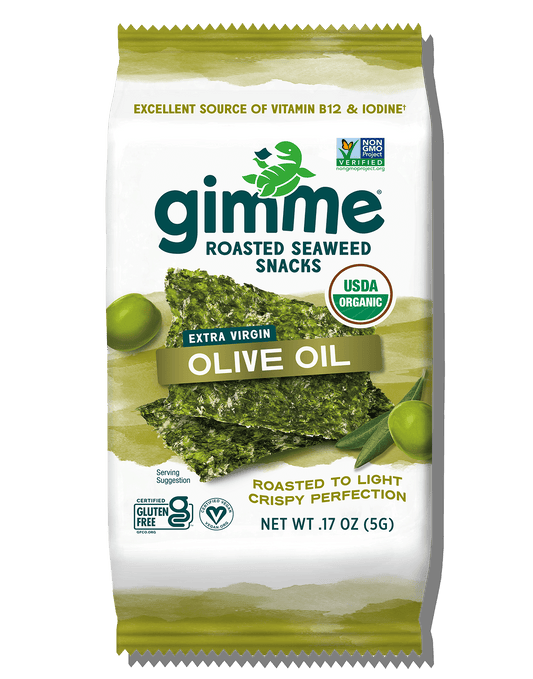
Yes, some of our products are made with sunflower and/or sesame oil. We do offer varieties that are seed-oil free, including Avocado Oil and Extra Virgin Olive Oil Roasted Seaweed Snacks. Please refer to the ingredient labels found on the package or on our website.
Does the soy sauce in your teriyaki products contain gluten?
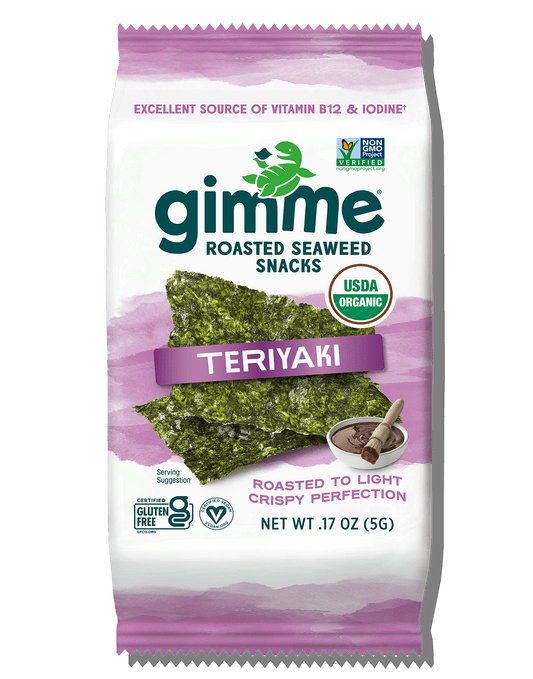
No, the soy sauce used in our teriyaki products is gluten-free.
Do any of your products contain added MSG?
We do not add monosodium glutamate (MSG) to any of our products. Like many other delicious foods (tomatoes, mushrooms, cheese, and many more), seaweed contains free glutamates, which gives it that delicious umami flavor.
Dietary Info
Discover the health benefits of gimme seaweed products, which are certified organic, gluten-free, vegan, and keto-friendly. Packed with essential nutrients like iodine, these snacks support thyroid health and fit seamlessly into various dietary lifestyles, offering a delicious and nutritious snacking option.
Is Gimme Seaweed Organic?
Yes! All Gimme Seaweed products are certified organic by QAI, a USDA-accredited certifying agency.
Are your products certified Gluten-Free?
All Gimme Seaweed products are certified gluten free by the Gluten-Free Certification Organization (GFCO).
Are your products Vegan?
Yes! All Gimme Seaweed products are certified vegan by Vegan Action (vegan.org).
Are your products Keto?
Yes! Our products are Keto friendly and a great contribution to a diet that's mindful about carbs.
Are your products Kosher certified?
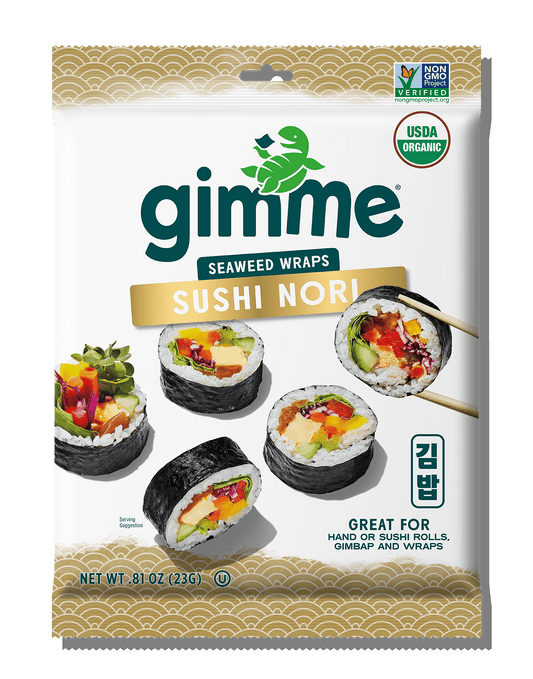
Our Sushi Nori is OU Kosher Certified, the world's largest kosher certification agency. All other products are not kosher certified.
How much iodine is in each serving?
Most of our products contain 15-40% DV (daily value) of iodine per 5g serving.
What are the benefits of iodine?
Iodine is an essential component of thyroid hormones, which in turn have a significant influence on the metabolic process in the human body.
Seaweed + Gimme 101
Dive into the world of seaweed with gimme's Seaweed 101, where you'll learn about the unique umami flavor and nutritional benefits of this ocean vegetable.
Discover how gimme's organic seaweed is sustainably grown off the coast of South Korea and transformed into delicious snacks that are both healthy and environmentally friendly.
What exactly is seaweed?
Seaweed is actually algae. In more appetizing words, it's a nutritious vegetable that grows in the sea (or, we like to say 'A miracle from the sea'). The specific variety of seaweed that we use to make our products is known as red seaweed.
What gives seaweed it's unique umami flavor?
Nature. Seaweed contains a lot of amino acids, like natural glutamic acid, which has umami flavor. It's this naturally salty-sweet flavor that makes seaweed taste so unique-and oh so good!
Is Gimme Seaweed organic?
Yes! All Gimme Seaweed products are certified organic by QAI, a USDA-accredited certifying agency.
Is organic healthier?
According to USDA data, organic foods have fewer pesticide residues than conventionally grown produce - but the amounts for both types of produce are within the level for safe consumption. From a macro and micronutrient perspective, organic and conventionally grown foods have a very similar nutrition profile. Source: Harvard Medical School
What specific type of seaweed are your products made from?
The scientific name is "Porphyra Yezonesis", a kind of red seaweed. There are 23 types of porphyra and porphyra yezonesis is the most delicious! After going through the roasting process, it provides a light and crispy.- "melt in your mouth" - taste experience.
Where is your seaweed grown?
Our seaweed is grown in USDA certified organic growing areas off the coast of South Korea. South Korea is historically known for producing the highest quality seaweed in the world.
Why do some seaweeds taste fishy and Gimme doesn't?
The key is using the highest quality seaweed possible and processing quickly after the harvest to preserve the fresh taste.
How are your snacks made?
Our seaweed is produced very simply. After the seaweed is harvested, we dry it, roast it with organic oils and seasoning and that's it!
What is the shelf-life of your seaweed?
One year.
Is your packaging recyclable?
Our trays are made of PET plastic, which is plastic #1 and can be recycled through most curbside recycling programs or with a local recycling center.
Our packaging wrappers are not recyclable. In an effort to offset this, we have started a long-term partnership with rePurpose to capture ocean-bound plastics and help keep our oceans healthy.
Is the silica pack inside the packaging safe if ingested?
The silica pack inside the packaging is not meant for consumption. However, if accidentally ingested, it is non-toxic.
Fun Facts
Begin your journey into the fascinating world of seaweed with gimme Seaweed's FAQs and Fun Facts page. Uncover the secrets behind this nutrient-rich, environmentally-friendly superfood.
Learn everything from why seaweed is a powerhouse of Vitamin B12 and iodine, to the unique conditions it needs to thrive. Are you ready to get tangled up in this amazing macroalgae.
What's so great about seaweed?
Seaweed is rich in nutrients like Vitamin B12 and iodine, has a delicious umami flavor, and is good for the planet! Treat your tastebuds and learn more on our Seaweed? page.
What three things does seaweed need to grow up healthy and delicious?
Nutrient rich seawater, cold temperatures, and enough sunlight to drive photosynthesis. Visit our Seaweed? page to learn more about how we grow our seaweed!
If seaweed snacks are made from red algae (ours are!), then why do they look green?
Red algae looks red in the ocean because of the phycobiliproteins, which attract and capture light energy used in photosynthesis. When red algae is harvested and dried it loses its red color but keeps all its green nutrients.
What vegetable is harvested in the winter (unlike most vegetables) when it's got the most flavor?
Seaweed! Yep. Seaweed is a vegetable.
What are the five basic tastes that your tongue can sense?
Sweet, bitter, sour, salty, and umami (umami is the flavor of - you guessed it - seaweed!)
What is Umami?
A flavor so big, it needs its own taste category. The word umami is originally Japanese, meaning deliciousness. To us, umami tastes savory and bold, and perfectly describes our flavorful roasted seaweed.
Did you know?
'Gim' means seaweed in Korean and is how 'Gimme' got it's name.
Is it impolite to say 'Gimme, Gimme, Gimme'?
Nope! Not when you are talking about seaweed!
What's the coolest, wildest, most incredibly delicious way to eat our roasted seaweed snacks?
Primarily algae, seagrass and, of course, seaweed! Did you know that a healthy sea turtle can live to be over 100 years old? That's why turtles symbolize longevity in many cultures.
Wholesale + Distribution Inquiries
Explore gimme's wholesale and distribution options, which currently extend to Canada, allowing businesses to bring these nutritious and tasty seaweed snacks to a wider audience. Whether you're looking to stock your shelves or expand your product offerings, gimme provides a delicious solution.
Do you distribute outside the United States?
Yes. We currently distribute to Canada.
Heavy Metals and Prop 65
What is the CALIFORNIA WARNING (Prop 65) and why is it important?
Prop 65, or the Safe Drinking Water and Toxic Enforcement Act of 1986, is a California "right to know" law that requires businesses to provide warnings about exposures to chemicals listed by the State of California as causing cancer, birth defects, or other reproductive harm. The law covers more than 900 chemicals, including some naturally occurring ones like heavy metals found in soil and water, which can make their way into food.
Prop 65’s warning threshold levels are almost always much lower than health-based thresholds set by U.S. federal health and safety regulators or even elsewhere in the world. For reproductive toxicants, for example, the level is set at 1,000 times below the level at which no effect is expected to be observed based on animal studies.
Why does Gimme Seaweed have a Prop 65 warning?
Seaweed, like other plants and like seafood, can naturally absorb trace amounts of minerals, including heavy metals, from the environment. To ensure our customers have as much information as possible, we provide Prop 65 warnings for some of our products. This doesn't mean our seaweed is unsafe - it's simply about transparency and ensuring that you're informed about the possible presence of these naturally occurring materials.
Is it safe to eat seaweed with heavy metals in it?
Yes, it is safe to eat as part of a balanced diet. The levels of heavy metals in our seaweed are comparable to those found in many vegetables, such as spinach and carrots, as well as some types of fish and shellfish. These trace amounts are well within the safety limits set by health authorities, and we routinely test our products to confirm that our products comply with FDA and all other health-based laws and regulations.
How do the heavy metals in seaweed compare to those in other foods?
Heavy metals like lead and cadmium are found in a variety of foods we eat every day. For example, root vegetables like carrots and potatoes, as well as seafood like mussels and oysters, can contain similar or even higher levels of these elements compared to seaweed. Just like these foods, seaweed can be enjoyed as part of a balanced diet.
What steps does Gimme take to ensure the safety of its seaweed?
We prioritize your health and safety. Our seaweed is harvested from a USDA certified organic growing area off the coast of South Korea, and we conduct regular testing on both raw materials and finished product to ensure they meet strict safety standards. We comply with all laws and regulations, including Prop 65, to bring you a product that is both delicious and safe.
Should I be worried about eating seaweed if I live in California?
Not at all! The Prop 65 warning is there to inform you, but it doesn't mean that eating seaweed poses a health risk. In fact, seaweed is a nutritious food that's packed with vitamins, minerals, and antioxidants. Like with any food, it's all about balance and moderation.
Why does seaweed contain heavy metals in the first place?
Seaweed, like other plants, absorbs minerals and nutrients from its environment as it grows. Since the ocean contains trace amounts of heavy metals, it's natural for seaweed to absorb them too. This is a normal part of how plants and seafood get their nutrients, whether they grow in the ocean or on land.
Can I still enjoy Gimme Seaweed as part of a healthy diet?
Absolutely! Gimme Seaweed is a wholesome snack that's rich in flavor and nutrients. As with all foods, it's best enjoyed as part of a balanced diet. We're committed to providing you with snacks that are not only tasty but also aligned with your health and wellness goals.
Has Gimme seen the results of a heavy metal test conducted by a 3rd party? If so,what is your response?
Yes, we have seen the reports but rest assured, there is no reason for concern. Our snacks are perfectly safe to enjoy. The heavy metal levels reported in these test results are below California’s strict Prop. 65 limits, which are set 1,000 times lower than the level where harm could occur. You would need to eat an unimaginably large number of packs per day for years to even approach levels where there could be a health concern. See below for more detail on Prop 65.
We have reviewed the 3rd party test results and, unfortunately, the interpretation is incorrect and misleading. Here we outline the key issues in the report:
a. Incorrect Benchmark: The test summary uses the wrong benchmark to evaluate the lab results. It compares the results to the limits from proposed federal legislation for baby food that was never enacted because regulators and scientists determined the limits were unachievable due to the naturally occurring presence of low levels heavy metals in many of the foods we eat everyday.
b. Understanding Arsenic: The lab analysis measured "total arsenic", which includes both organic and inorganic types. While inorganic arsenic could be a concern, organic arsenic is naturally found in many foods and isn't harmful. Unfortunately, the 3rd party interpretation of the test mistakenly compares the total arsenic results with the proposed limit for inorganic arsenic, which is misleading since they're not the same thing. For more information on the difference between organic and inorganic arsenic, you can refer to this article from McGill University What's the Difference Between Organic and Inorganic Arsenic?
c. Prop 65: Gimme benchmarks against California's Prop 65. Prop 65, or the Safe Drinking Water and Toxic Enforcement Act of 1986, is a California "right to know" law that requires businesses to provide warnings about exposures to chemicals listed by the State of California as causing cancer, birth defects, or other reproductive harm. The law covers more than 900 chemicals, including some naturally occurring ones like heavy metals found in soil and water, which can make their way into food.
To our knowledge, Prop 65 levels are the most stringent regulatory standards established by any regulatory agency in the U.S., set far below the levels expected to cause an adverse health impact. Specifically, Prop 65 levels are set 1,000 times below the No Observed Effect Level (NOEL) – a safety margin so large that even trace amounts of substances like lead, cadmium, and mercury are well within the safe limits for consumption. These limits are very conservative, and they don’t mean that a product is unsafe.
The levels for lead, cadmium, and mercury in the 3rd party report are below the “safe harbor” levels established under California’s Prop 65. As discussed above, the lab did not test for inorganic arsenic - the type most relevant under Prop 65.
We are committed to the safety of our customers and will continue to conduct regular testing on both raw materials and finished product to ensure they meet strict safety standards. We comply with all laws and regulations, including Prop 65, to bring you a product that is both delicious and safe. You can feel confident that Gimme Seaweed Snacks are 100% safe for you and your family to enjoy.


 NewSold out
 NewSold outSold out
 Sold outSold out
 Sold out
 Sold out
 Sold outSold out
 Sold outSold out
 Sold outSold out
 Sold out
 Sold outSold out
 Sold outSold out
 Sold out
 Sold out
 Sold out
 Sold out


